

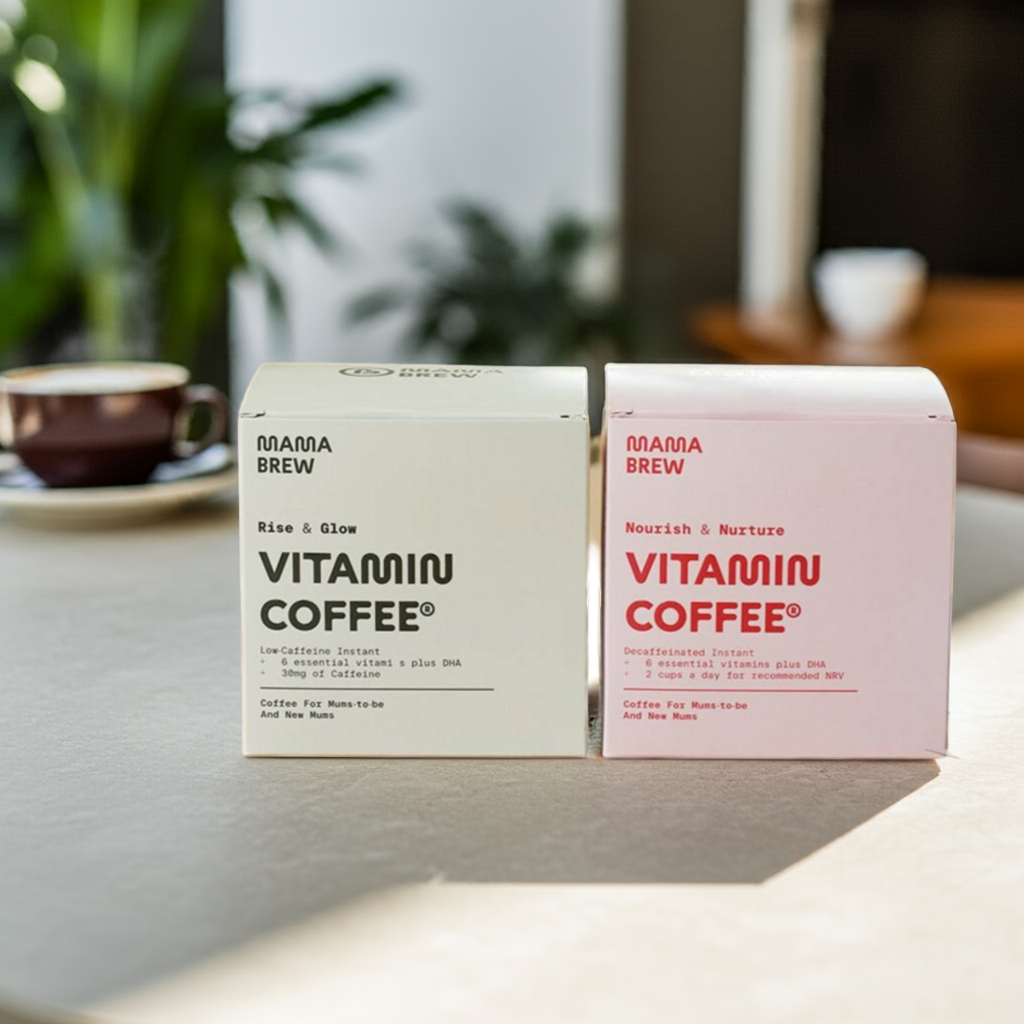
What's in Every Cup
Every sachet of Mama Brew is built around the same six nutrients, whichever version you choose. Here's exactly what's in each cup, at a glance.
What's in One Sachet
Each cup gives you 3g of premium Colombian instant coffee, plus:
| Nutrient | Amount (% NRV) | Role |
|---|---|---|
| Folic Acid | 50% NRV | Supports baby's development and your recovery |
| Vitamin D | 50% NRV | Immunity and energy |
| Vitamin B12 | 50% NRV | Helps fight fatigue and supports red blood cells |
| Magnesium | 40% NRV | Mood, sleep, and muscle function |
| Vitamin C | 50% NRV | Immunity and helps the body absorb iron |
| Calcium | 13% NRV | Bone health and cell function |
NRV: Nutrient Reference Value, based on adult daily intake.
Decaf vs Low Caff: The Only Difference Is Caffeine
The vitamin content is identical across both versions. The only thing that changes is how much caffeine is left in the cup:
| Decaf | Low Caff | |
|---|---|---|
| Caffeine per cup | Under 6mg | Under 30mg |
| Vitamin content | Same 6 nutrients above | Same 6 nutrients above |
| Best for | Days you want to stay as close to zero caffeine as possible | Days you want a touch more of a lift, still well within NHS guidance |
For context, the NHS recommends under 200mg of caffeine per day during pregnancy and up to 300mg per day while breastfeeding. Both Mama Brew versions sit far below either limit, even at one to two sachets a day.
Why This Combination
These six nutrients were chosen because pregnancy and the postpartum period place real demands on the body, and coffee is one of the few daily rituals most women aren't willing to give up. Folding proven, NHS-referenced nutrients into that existing habit means getting real nutritional support without adding another supplement, another routine, or another thing to remember.
For a closer look at what each nutrient does and why it made the formulation, read The Vitamins Behind Mama Brew. To understand how the caffeine is removed in the first place, see How Is Our Coffee Decaffeinated?
This article is for general information and does not replace advice from your midwife, GP, or healthcare provider. Always check with a healthcare professional about your individual nutritional needs during pregnancy and breastfeeding.


